 Ski Goggle Lens Options Explained: What to Know Before You Buy
Ski Goggle Lens Options Explained: What to Know Before You Buy
Posted
by
Bianca Chang
on Wednesday, August 20, 2025
Nothing ruins a ski day faster than foggy goggles or not being able to see where you’re going. The right ski and snowboard goggles provide protection from wind, snow, and UV rays, while also enhancing visibility and safety on the mountain. As you shop for the best ski goggles, you’ll find a ton of different options like goggle lenses, shapes, and features, so we’ve broken down the different ski goggle lens options so you can choose the best goggle for you.
What We'll Cover:
Lens Tints and Colors
Lens Shapes
Other Goggle Features
Goggle Care
Lens Tints and Colors
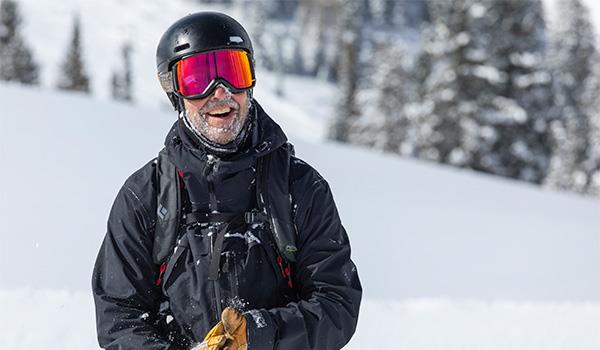
Not all lenses are created equal. Different lenses are designed for various conditions you might encounter on the mountain. But, as you’ve probably experienced, the hundreds of lens options can be overwhelming. To simplify the options, the industry has adopted a standardized measurement called Visual Light Transmission or VLT.
VLT is the percentage of the amount of light that can pass through the lens. The higher the percentage, the more light is allowed to pass through a lens, which is ideal for lower-light conditions. The lower the percentage, the less light is allowed through, which is good for bright conditions.
Along with VLT percentages, you may also encounter S Rating Categories that group lenses based on their best-use conditions. Here’s a general breakdown of the different lens types and categories:
S Rating
Category |
VLT % |
Best Use |
Common Lens Colors |
| S0 |
80% - 100% |
Cloudy and Night Conditions: for overcast, foggy, snowy conditions or night skiing |
Little to no lens tint
Clear, Yellow, Amber |
| S1 |
43% - 80% |
Cloudy Conditions: for flat light, dull overcast, and foggy conditions with light to medium snowfall |
Lightly tinted
Rose, Pink, Persimmon, Yellow, Amber |
| S2 |
18% - 43% |
Variable Conditions: for a majority of weather conditions, partly cloudy to sunny days |
Medium lens tint
Blue, Green, Red, Purple |
| S3 |
8% - 19% |
Bright Conditions: for mostly sunny and clear skies |
Dark tint
Black, Red |
| S4 |
0% - 8% |
Very Bright Conditions: for bright sun, clear skies, and ideal for high-altitude |
Very dark tint
Platinum, Black, Red |
Photochromic Lenses
Photochromic lenses have become more popular in ski and snowboard goggles because they cover a wide range of light conditions, making it super convenient on a ski day or vacation. Rather than needing to carry a spare lens and swap out lenses throughout the day, photochromic lenses adapt to the light conditions you’re in. On sunny conditions, they darken to block out more light, and in cloudy or shaded conditions, they lighten to allow more visibility. While photochromic lenses are more expensive than traditional lenses, they eliminate the need to swap lenses throughout the day while conditions change.
 Lens Shapes
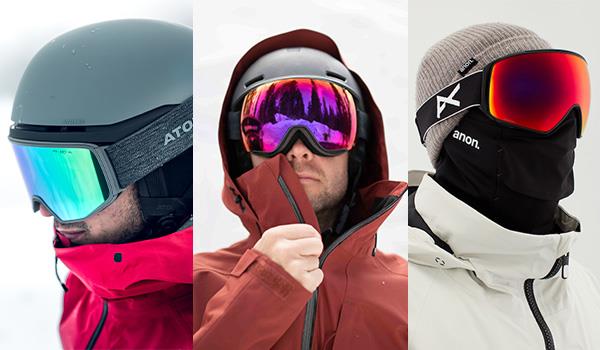
There are three main lens shapes used in ski and snowboard goggles. The different lens shapes were designed to minimize visual distortion and increase the field of view. When choosing your goggle lens shape, consider the benefits of each and take into account your personal preferences, style, and budget.
Cylindrical
Cylindrical lenses have a horizontal curve from left to right and a flatter, more square shape. Cylindrical ski goggles sit closer to the face, which offers a good horizontal field of view. Cylindrical goggles tend to be at a lower price point compared to the other lens shapes.
Spherical
Spherical lenses have a rounded, bubble shape that curves from left to right and up and down. The spherical shape offers a wider overall field of view with very little optical distortion and also more space for ventilation to reduce the chance of fogging.
Toric
The toric shape is a mix of the spherical and cylindrical shapes. It’s rounded like a spherical lens, but with a slightly flatter vertical profile. This change offers a substantial reduction in peripheral distortion, providing the maximum clarity.
Other Goggle Features
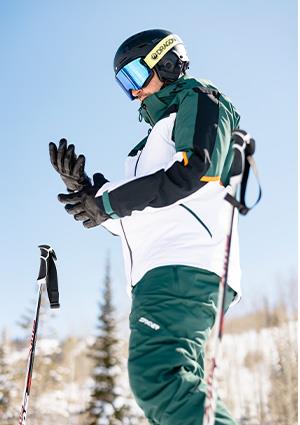
Other features to think about when choosing your next pair of goggles:
Anti-Fog Coating: Most goggles have anti-fog coatings inside the lens to prevent moisture from building up and to reduce fogging. Some brands, like Anon, incorporate additional tech, like a hydrophobic coating to repel water and snow and prevent it from accumulating on the lens, and an oleophobic coating to provide extra protection against smudges and fingerprints.
Mirrored Lenses: Mirrored lenses reflect more light to reduce glare. Mirrored lenses are commonly found on goggles for brighter conditions.
Interchangeable Lenses: Many goggles have interchangeable lenses, allowing you to swap out lenses depending on the conditions. Interchangeable lenses may not be available on lower-end goggles.
Quick-Change Lenses: Higher-end goggles may offer quick-change lens systems, like magnetic closures. Quick-change lenses make it a breeze to change lenses, taking just a few seconds to swap them out, like Oakley's Line Miner Pro or Smith's Squad Mag.
Goggle Care
Here are a few care tips to follow to keep your goggles working their best:
- Don't rest your goggles on your lenses. Keep stored in the provided case to prevent scratches.
- If you struggle with your goggles fogging up, avoid taking your goggles on and off throughout the day. The changes in temp from lifting your goggles up and down can cause the lenses to fog. Also, ensure that you have a proper fit with no gaps, and your helmet, hat, or snow does not block the ventilation at the top of the goggles.
- Use a lens cloth rather than your shirt or other material to prevent scratches.
- Do not touch the inside lens, since that can mess with the anti-fog coating. Shake out any water and allow your goggles to air dry.
- Allow your goggles to dry before storing.
- Do not leave goggles in direct sunlight, as it causes the plastic and foam to break down quicker.
Final Thoughts
The best ski goggle lens for you depends on where, when, and how you ski. For all-day visibility in changing conditions, consider photochromic or interchangeable lenses. If you usually ski in bright weather, go for a dark, mirrored option. For stormy days or night skiing, stick with high-VLT tints like yellow or rose.
Don’t underestimate your goggles—they’re one of the most important pieces of gear for comfort, safety, and performance on the mountain. With the right lens, you’ll see the slopes more clearly—and enjoy your turns a whole lot more.
Categories:
Gear
Tagged: Ski Accessories, How To Choose, Goggles
« Previous Post
|